 Tastewise
In a classic study with adults, tasting unfamiliar foods more often made people like them more.
Pliner, P. (1982). The effects of mere exposure on liking for edible substances. Appetite, 3(3), 283–290.
For adults who are picky eaters
Picky eater? Learn to like food, one small step at a time.
Tastewise is a gentle coach for grown-ups who find new foods hard. A friendly turtle guides you from looking and smelling to touching and tasting, at your pace, with no pressure and no judgement.
Free to download for iPhone and Android. Premium includes a 7-day free trial. Coming soon to the App Store and Google Play.
Stopping is never failing. We go at your pace.

Does this sound familiar?
You order the same safe dish every timeDinner invitations make you nervousTextures can feel wrong before you even tasteA smell can end the meal for youYou would like to eat more widely, but not be pushed
You are not being difficult. Many adults feel this way, and researchers study it as a real pattern, not a personality flaw.
How it works
Small, brave steps your senses can keep up with
Instead of “just try it”, Tastewise breaks a food into tiny steps. Each calm, repeated meeting with a food makes the next one easier.
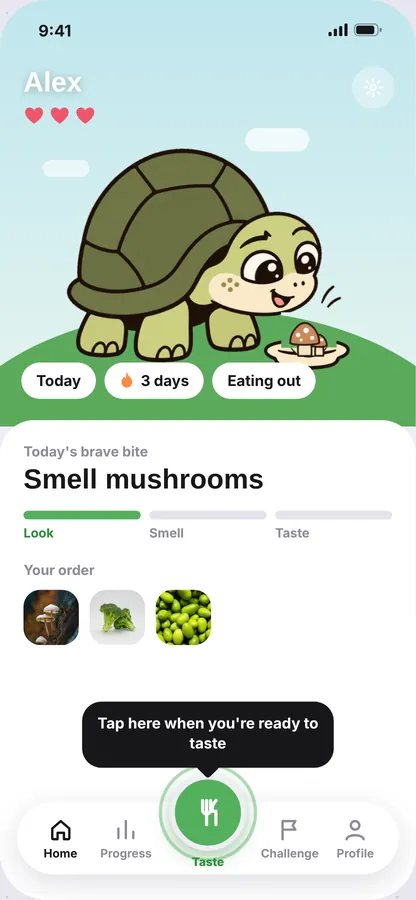
1. Look
Get used to how the food looks on your plate. No eating needed.
2. Smell
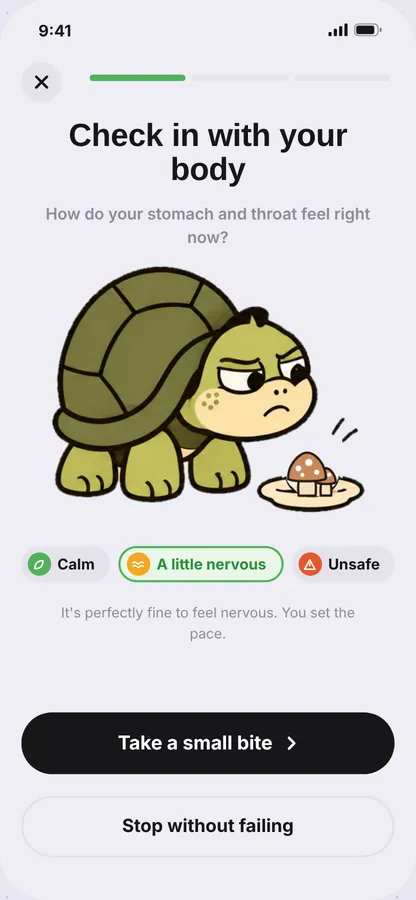
Notice the smell and how your body feels. Calm, nervous or unsafe is all fine.
3. Touch
Feel the texture with your fingers or lips, the step many people skip.
4. Taste
A tiny bite when you are ready. Then repeat until it feels ordinary.
Features
Everything a picky adult actually needs
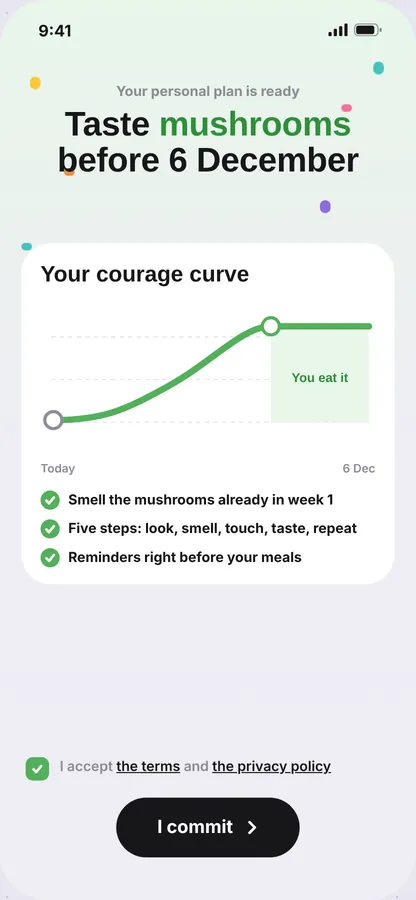
A personal plan
Tell us your goals, the foods you avoid and what makes it hard. You get a plan with a first mission that feels doable.
Your taste archetype
Texture Detective, Scent Tracker, Safety Seeker and more. Understand why food feels the way it does for you.
Eat-out plans
Going to a restaurant or a friend’s dinner? Get a calm plan for what to order and how to handle it.
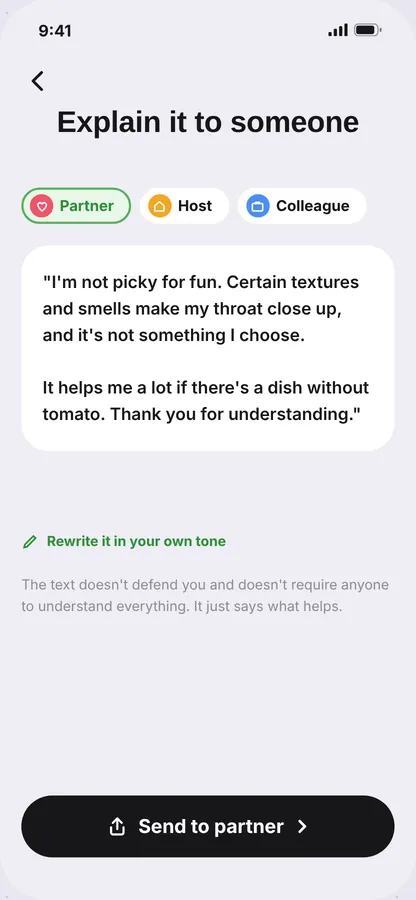
Explain cards
Short, honest messages you can share so others understand, without having to defend yourself.
Challenges, streaks and milestones
Themed challenges and small wins that add up. The numbers only go up.
Meal-time missions
A gentle nudge on your lock screen right before you eat, so today’s brave bite actually happens.
A guide that never rushes you
Choose how the turtle talks to you: cheerleader, gentle, straightforward or mindful. It celebrates small wins and reminds you that stopping is part of the process.
“It’s perfectly fine to feel nervous. You set the pace.”Your turtle, before every tasting

Honest proof
Built on what research says about liking food
Tastewise is new, so we will not show you made-up reviews. Here is the research the method is built on.
Early studies found that preferences rose with the number of exposures, and that 5 to 10 tastes could change how much a food is liked.
Birch, L. L. & Marlin, D. W. (1982). I don’t like it; I never tried it. Appetite, 3(4), 353–360.In a randomised trial, repeated tasting increased liking for an unfamiliar vegetable more than rewards did.
Wardle, J., Herrera, M.-L., Cooke, L. & Gibson, E. L. (2003). European Journal of Clinical Nutrition, 57, 341–348.Researchers describe adult picky eating as its own pattern, with its own experiences and challenges, and study how it can change.
Kauer, J., Pelchat, M. L., Rozin, P. & Zickgraf, H. F. (2015). Adult picky eating. Appetite, 90, 219–228.Adult picky eaters tend to eat a narrower range of foods, including fewer fruits and vegetables.
Zickgraf, H. F. & Schepps, K. (2016). Fruit and vegetable intake and dietary variety in adult picky eaters. Food Quality and Preference, 54, 39–50.Fear of new foods is a measurable trait in adults, not just a childhood phase.
Pliner, P. & Hobden, K. (1992). Development of a scale to measure the trait of food neophobia in humans. Appetite, 19(2), 105–120.
Most exposure research was done with children, and results vary from person to person. Tastewise is a self-help tool, not treatment. If eating affects your health, weight or daily life, please talk to a doctor or psychologist.
Questions and answers
Who is Tastewise for?
Tastewise is made for adults who are picky eaters or find new foods difficult and want to eat more widely, feel calmer at meals and eat with others without stress.
Is Tastewise a treatment for ARFID or an eating disorder?
No. Tastewise is a self-help and habit tool, not medical treatment. If you think you may have ARFID or another eating disorder, if you are losing weight, or if eating affects your health or daily life, please talk to your doctor, a psychologist or a dietitian. Many people use tools like this alongside professional support.
Do I have to eat foods I don’t want to?
Never. You choose the foods and the pace. Each step starts with simply looking. You can stop at any time, and stopping is never counted as failing.
How does gradual food exposure work?
You meet a food in small steps: look, smell, touch and then taste. Calm, repeated meetings help many people get used to new foods. Research on repeated tasting shows liking often grows with exposure.
How long does it take?
It is different for everyone. Most people need several calm meetings with a food before it feels ordinary. Your plan sets a realistic first goal and adjusts as you go.
Can it help me eat out at restaurants?
Yes. The eat-out feature helps you plan what to order before you go, and explain cards help you tell partners, hosts or colleagues what helps, in your own words.
What does it cost?
Tastewise is free to download. Premium unlocks the full plan and all features, with a 7-day free trial, then a yearly or monthly subscription. Prices are shown in the app in your local currency, and you can cancel any time in your App Store or Google Play settings.
What happens to my data?
We only collect what the app needs to work and to improve it. No ads, no selling of data and no tracking across other companies’ apps. You can delete your account in the app. Read our privacy policy for details.
Which languages does Tastewise speak?
Tastewise is available in 15 languages, including English, Danish, German, French, Spanish, Italian, Portuguese (Brazil), Dutch, Swedish, Norwegian, Finnish, Polish, Czech, Turkish and Indonesian.

Ready for your first brave bite?
Get your personal plan in a few minutes. Start with just looking.
Coming soon to the App Store and Google Play.